Archives
- 2026-08
- 2026-07
- 2026-06
- 2026-05
- 2026-04
- 2026-03
- 2026-02
- 2026-01
- 2025-12
- 2025-11
- 2025-10
- 2025-09
- 2025-03
- 2025-02
- 2025-01
- 2024-12
- 2024-11
- 2024-10
- 2024-09
- 2024-08
- 2024-07
- 2024-06
- 2024-05
- 2024-04
- 2024-03
- 2024-02
- 2024-01
- 2023-12
- 2023-11
- 2023-10
- 2023-09
- 2023-08
- 2023-07
- 2023-06
- 2023-05
- 2023-04
- 2023-03
- 2023-02
- 2023-01
- 2022-12
- 2022-11
- 2022-10
- 2022-09
- 2022-08
- 2022-07
- 2022-06
- 2022-05
- 2022-04
- 2022-03
- 2022-02
- 2022-01
- 2021-12
- 2021-11
- 2021-10
- 2021-09
- 2021-08
- 2021-07
- 2021-06
- 2021-05
- 2021-04
- 2021-03
- 2021-02
- 2021-01
- 2020-12
- 2020-11
- 2020-10
- 2020-09
- 2020-08
- 2020-07
- 2020-06
- 2020-05
- 2020-04
- 2020-03
- 2020-02
- 2020-01
- 2019-12
- 2019-11
- 2019-10
- 2019-09
- 2019-08
- 2019-07
- 2019-06
- 2019-05
- 2019-04
- 2018-07
-
There have been attempts to stimulate the dopaminergic syste
2020-03-06
There have been attempts to stimulate the dopaminergic system to influence cognition in women around menopause who have subjective complaints about their cognition by Epperson et al. (Epperson et al., 2011, Epperson et al., 2015). In perimenopausal and postmenopausal women, Epperson et al. found tha
-
In mammals ribonucleotide reductase RNR is a
2020-03-06
In mammals, ribonucleotide reductase (RNR) is a unique enzyme that catalyzes the rate-limiting step of de novo synthesis of deoxyribonucleoside triphosphates (dNTPs).7, 8 Mammalian RNR consists of two homodimer subunits: the large catalytic dimer RRM1 and the small regulatory dimer RRM2 or RRM2B. An
-
br Acknowledgments br Significance The mechanisms underlying
2020-03-06
Acknowledgments Significance The mechanisms underlying the adverse effects of Epo-stimulating agents on the reduced survival of cancer patients are not well understood. Here, we identified EphB4 as an alternative Epo receptor, which triggers Src/Stat3 signaling via EphB4. We also showed that r
-
With regards to translational development of
2020-03-05
With regards to translational development of SMEPT, we acknowledge that we are not aware of any trials currently underway to validate this methodology in clinical settings. It appears fair to say that enthusiasm and commitment from corporate developers does not match that of academic partners. One r
-
br Materials and methods br Results br
2020-03-05
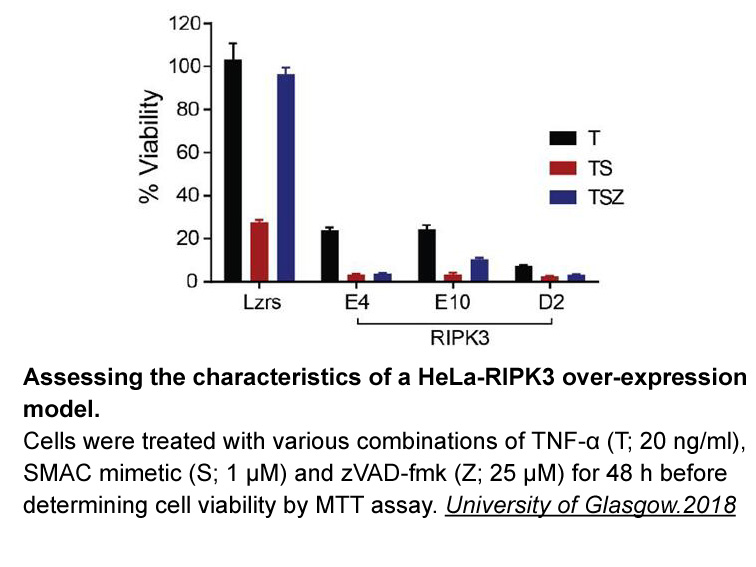
Materials and methods Results Discussion Chronic inflammation is central to COPD and plays a critical role in the disease pathogenesis and progression. Among the various inflammatory cells, neutrophils are the key players in COPD pathogenesis. Their numbers are raised in airspaces and lung
-
The significance of the difference
2020-03-05
The significance of the difference in the DDR2 binding specificity towards fibrillar and non-fibrillar collagens is not understood, but may imply differences in biological responses when chondrocytes bind to different collagens in the growth plate. Investigations by Labrador et al. (2001) have shown
-
Redundancy of tumor promoting signaling
2020-03-05
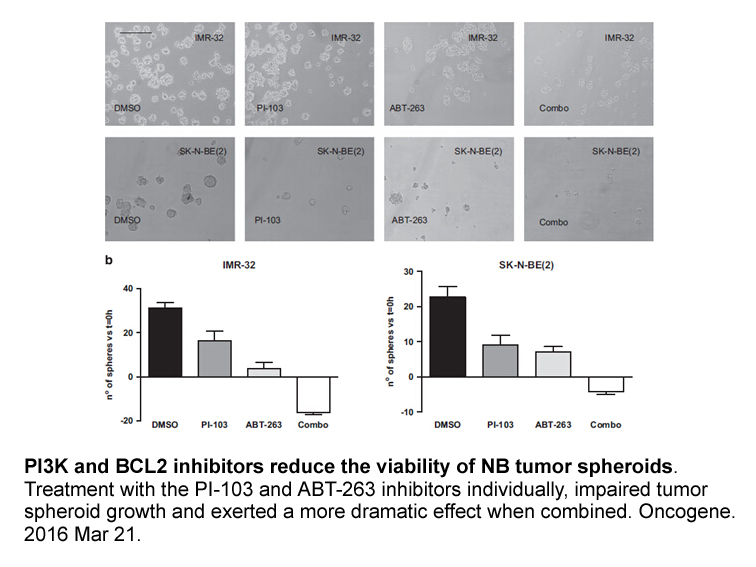
Redundancy of tumor promoting signaling pathways is one of the mechanisms that prevent a lasting effect of targeted therapies, as has been demonstrated by the growing number of alternative pathways that confer resistance to EGFR-targeted therapies [3]. We show here that CSF-1R can, at least partiall
-
histone demethylase br Chemistry Scheme shows the synthesis
2020-03-05

Chemistry Scheme 1 shows the synthesis of compounds 15-1–15-33 from commercially available 2-(4-aminophenyl)acetonitrile (8a). Protection of the starting material 8a with di-t-butyl dicarbonate afforded 9. The reaction of 9 with methyl 1-chloroisoquinoline-4-carboxylate in the presence of sodium
-
The synthesis of tricyclic analogs is described in Scheme Ox
2020-03-05
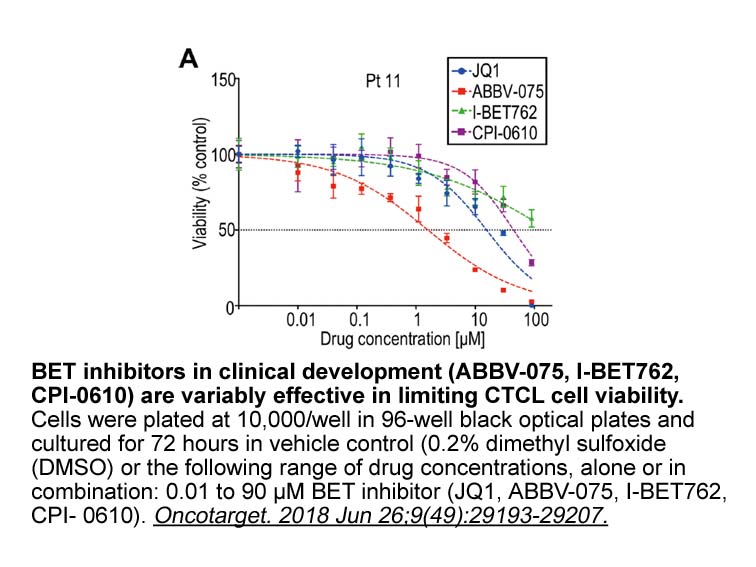
The synthesis of tricyclic analogs 28–33 is described in Scheme 3. Oxidative C–C bond cleavage of the terminal olefin of 39i afforded a tricyclic product 52 without isolation of an aldehyde expected as an intermediate. Aminolysis of the chloride 52 with optionally substituted anilines afforded 28–30
-
VEGF inhibition causes vascular regression and tissue hypoxi
2020-03-05
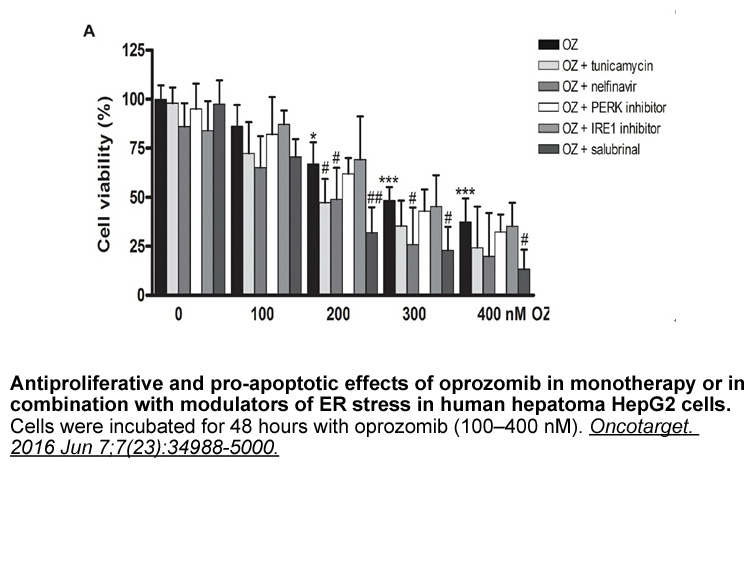
VEGF inhibition causes vascular regression and tissue hypoxia in tumor tissues and their surrounding healthy adipose tissues. In this regard, tumors in steatotic livers and adjacent to adipose tissues would experience more hypoxia than non-adipose tumors. Indeed, our present experimental results sup
-
Terfenadine Our study revealed elevated basal Akt phosphoryl
2020-03-05
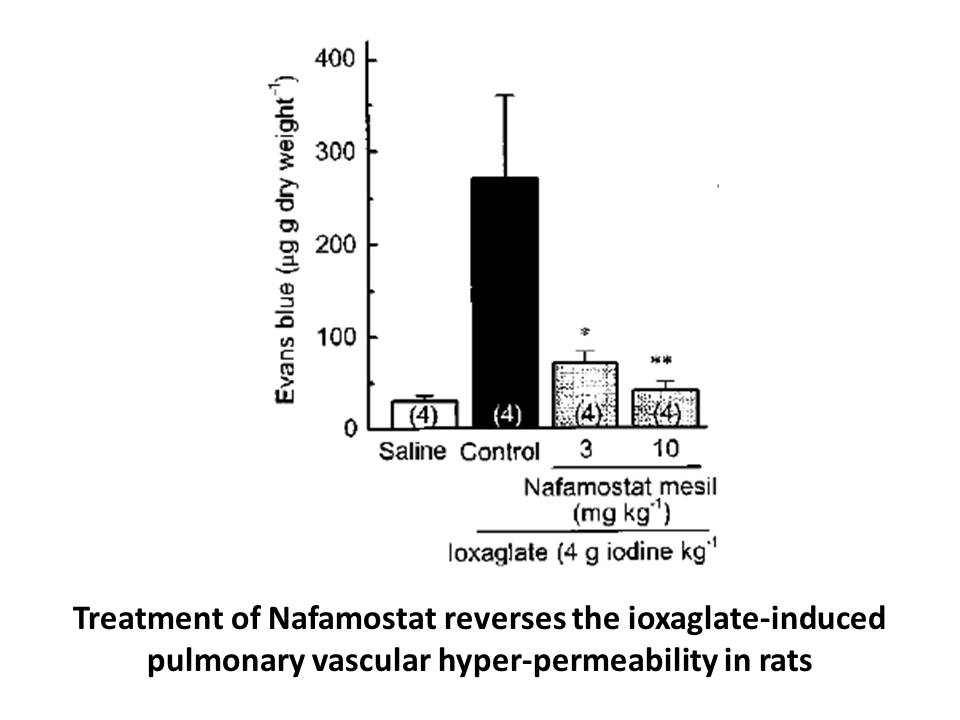
Our study revealed elevated basal Akt phosphorylation in diet-induced obesity, the effect of which was reversed by ETAKO. Activation of Akt promotes cardiac hypertrophy via a number of cellular mechanisms including activation of its downstream targets such as mTOR and GSK3β [45, 46]. Short-term acti
-
Since clinical studies mostly involved cases that
2020-03-05
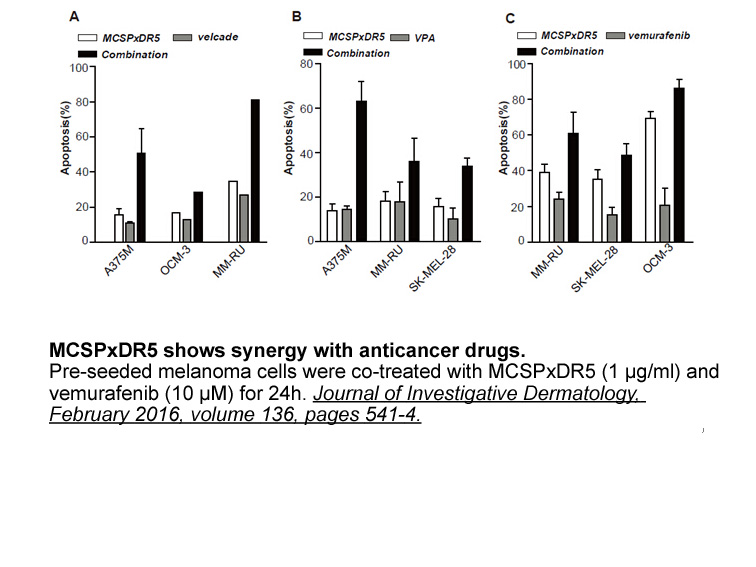
Since clinical studies mostly involved cases that used MPA, data from studies that examined other types of progestogens are very limited. While the WHI study examined the combination of conjugated equine estrogens plus MPA [1], the Million Women Study [2] that also demonstrated an increased risk of
-
More than thirty enzymes with PLA activity have been
2020-03-04
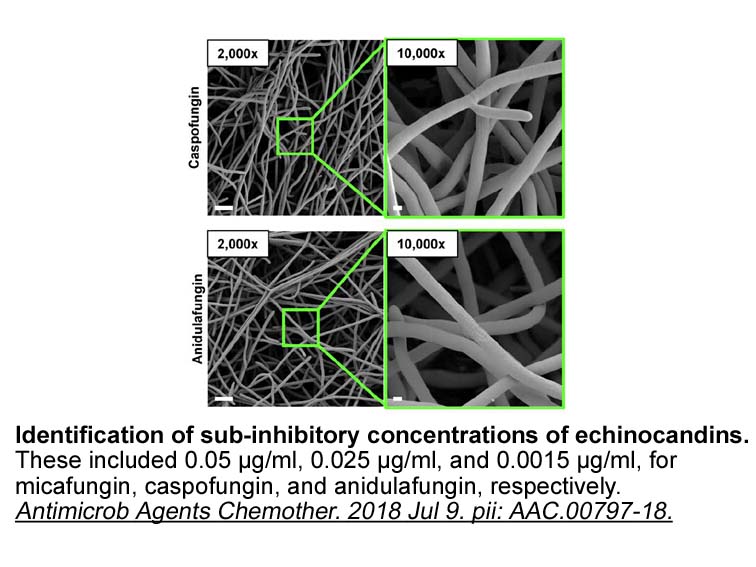
More than thirty enzymes with PLA2 activity have been described and, based on sequence similarities, they are currently classified in 16 groups, each containing several sub-groups [16]. However, based on biochemical features these enzymes are frequently grouped into six major families: secreted phos
-
Given its high frequency it
2020-03-04
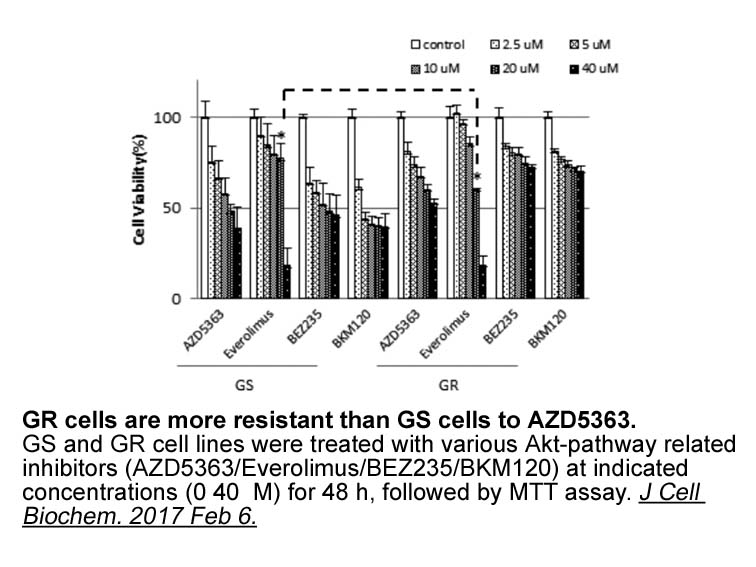
Given its high frequency, it is not surprising that different strategies have been developed to restore the sensitivity of EGFR T790M-mutant Fenofibric acid to EGFR inhibition. To date, several different strategies have been evaluated in both preclinical and clinical models, but only few have been
-
EBI remains an orphan GPCR and the identity and source
2020-03-04
EBI2 remains an orphan GPCR and the identity and source of its ligand are yet to be described. Molecular studies of EBI2 have suggested that this receptor has constitutive activity, similar to that observed for many herpesvirus-encoded 7TM receptors (Benned-Jensen and Rosenkilde, 2008, Rosenkilde et
16543 records 933/1103 page Previous Next First page 上5页 931932933934935 下5页 Last page