Archives
- 2026-08
- 2026-07
- 2026-06
- 2026-05
- 2026-04
- 2026-03
- 2026-02
- 2026-01
- 2025-12
- 2025-11
- 2025-10
- 2025-09
- 2025-03
- 2025-02
- 2025-01
- 2024-12
- 2024-11
- 2024-10
- 2024-09
- 2024-08
- 2024-07
- 2024-06
- 2024-05
- 2024-04
- 2024-03
- 2024-02
- 2024-01
- 2023-12
- 2023-11
- 2023-10
- 2023-09
- 2023-08
- 2023-07
- 2023-06
- 2023-05
- 2023-04
- 2023-03
- 2023-02
- 2023-01
- 2022-12
- 2022-11
- 2022-10
- 2022-09
- 2022-08
- 2022-07
- 2022-06
- 2022-05
- 2022-04
- 2022-03
- 2022-02
- 2022-01
- 2021-12
- 2021-11
- 2021-10
- 2021-09
- 2021-08
- 2021-07
- 2021-06
- 2021-05
- 2021-04
- 2021-03
- 2021-02
- 2021-01
- 2020-12
- 2020-11
- 2020-10
- 2020-09
- 2020-08
- 2020-07
- 2020-06
- 2020-05
- 2020-04
- 2020-03
- 2020-02
- 2020-01
- 2019-12
- 2019-11
- 2019-10
- 2019-09
- 2019-08
- 2019-07
- 2019-06
- 2019-05
- 2019-04
- 2018-07
-
On the one hand levels of
2020-01-09
On the one hand, levels of up to 20 nM P4 have been reported for a cyprinid species, Labeo rohita, in summer (Suresh et al., 2008). Similarly, P4 concentrations in tilapia, Oreochromis mossambicus, were found to range up to 27 nM (Cornish, 1998). Nevertheless in sturgeon P4 levels of approximately 3
-
Enzyme selectivity of many enzymes like galactosidases acyla
2020-01-09

Enzyme selectivity of many LDN193189 like β-galactosidases, acylases, epoxyhydrolases, lipases, etc. has also been modulated by using different immobilization techniques. It can result in the selection of optimal biocatalyst for different processes. This has many advantages over strategies like gene
-
Seliciclib The significance of the two
2020-01-08
The significance of the two biomarkers for the detection of Aspergillus antigen and DNA in the sputum of patients cannot be over-emphasised. The mean GMI value was higher among CPA patients than the ABPA. This might not be unconnected with the fact that CPA is associated with lung damage and pre-exi
-
Hinokitiol has versatile abilities as anticancer antimicrobi
2020-01-08
Hinokitiol has versatile abilities as anticancer, antimicrobial and molecule transport agents and appears to have no developmental toxicity or carcinogenic effects (Imai et al., 2006b). For anticancer activities, it causes apoptosis and 5-Formyl-CTP arrest in many different types of cancers, such a
-
MI has been detected in wastewater at concentrations of g
2020-01-08
3MI has been detected in wastewater at concentrations of 640–700 μg L−1 (Hwang et al., 1995) and up to 20 mg L−1 in decaying algal water environments (Peller et al., 2014). It is likely that 3MI accumulation in fish might be due to the degradation of endogenous amino acids. The presence of this che
-
br Introduction Benzanthrone BNZ is a dye intermediate
2020-01-08
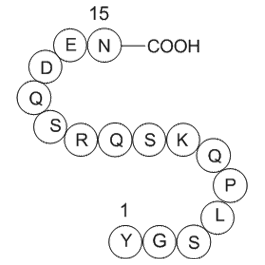
Introduction Benzanthrone (BNZ) is a dye intermediate used in the synthesis of number of polycyclic vat and disperse dyes. It has been detected as an environmental pollutant in urban ambient air particulates, originating from furnace effluents, municipal refuge, wood and coal combustion and autom
-
Results from H also complement
2020-01-08

Results from H5 also complement work of the AICPA Board of Examiners, which has concluded “newly licensed CPAs must demonstrate higher-order skills such as critical thinking, problem solving, analytical ability, and skepticism more frequently. It is critically important that newly licensed CPAs are
-
In contrast to AChE BuChE
2020-01-08
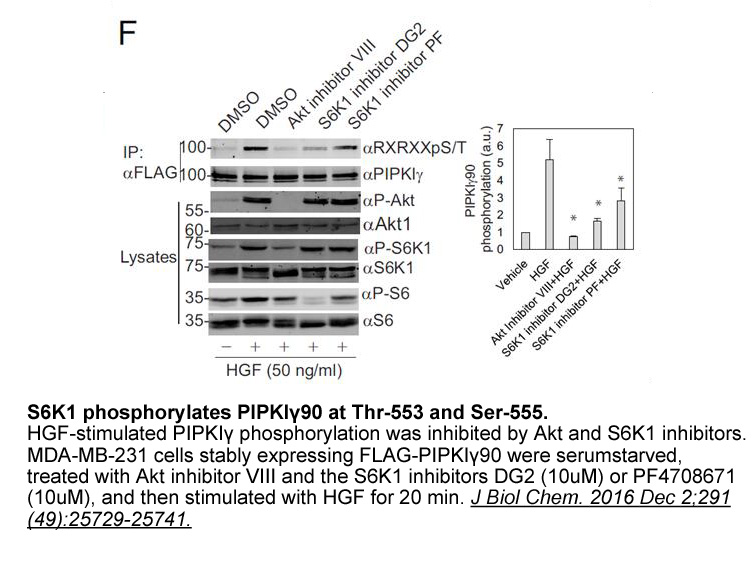
In contrast to AChE, BuChE (Table 2) exhibited a measurable time-dependent inactivation only with saha inhibitor 2 among the four acetophenones in this study. Values of Ki obtained from steady-state inhibition of BuChE by all four acetophenones were, as noted in the Results, 10- to 200-fold greater
-
In S cerevisiae Mek a paralog
2020-01-08

In S. cerevisiae, Mek1, a paralog of the checkpoint kinase Chk2, mediates cell-cycle arrest in response to meiotic defects (Bailis and Roeder, 2000, Xu et al., 1997). Mek1 is associated with meiotic chromosome axes, where its activation requires interactions with two other axis proteins, Hop1 and Re
-
Additionally although the membrane localized ER signaling de
2020-01-08
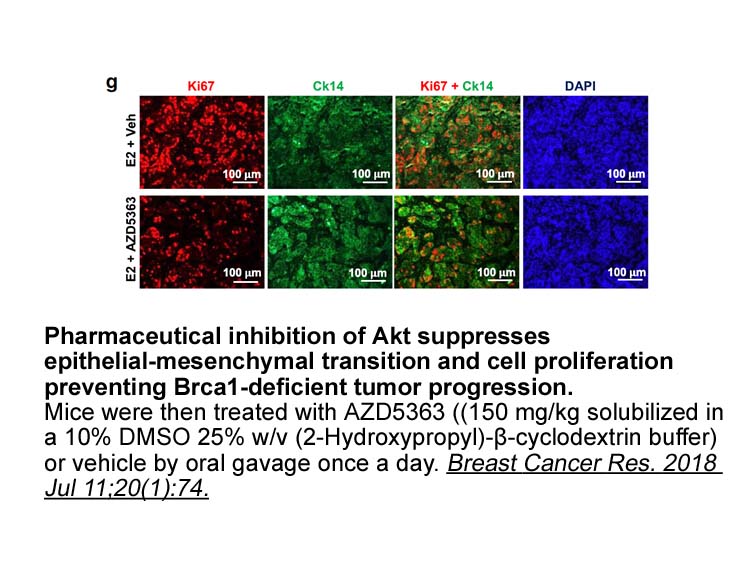
Additionally, although the membrane-localized ER signaling described in this review has generally been studied in isolation from nuclear signaling, it is becoming clearer and clearer that integration of these mechanisms must be considered (Frick, 2015). Perhaps the distinct estradiol signaling mecha
-
br Conflict of interest br Acknowledgments This
2020-01-08

Conflict of interest Acknowledgments This work was supported in part by grants from the , Spain (INCITE08PXIB203092PR). VGM was supported by a FPU pre-doctoral scholarship from the , Spain. MLR was supported in part by a crowdfunding campaign (PRECIPITA), coordinated by the Spanish Foundation
-
FGF ERK signaling has been implicated in epithelial mesenchy
2020-01-07
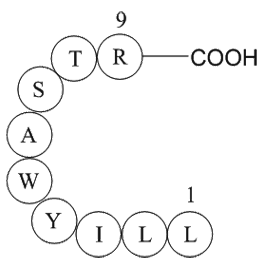
FGF/ERK signaling has been implicated in epithelial-mesenchymal interactions in a wide range of tissues (Huh et al., 2015, Klein et al., 2006, Rice et al., 2004, Zhang et al., 2006, El Ramy et al., 2005, Volckaert and Langhe, 2015). During embryonic organogenesis and in adult organs, we often observ
-
The mechanisms by which Cav enhances embryonal tumor progres
2020-01-07

The mechanisms by which Cav-1 enhances embryonal tumor progression are currently unknown. Given the documented ability of Cav-1 to drive increased biogenesis of caveolae and accelerate the flow of nutrients (mostly glucose and fatty acids) across the membrane, as observed in particular in adipocytes
-
E ubiquitin ligases are key players in the ubiquitin
2020-01-07
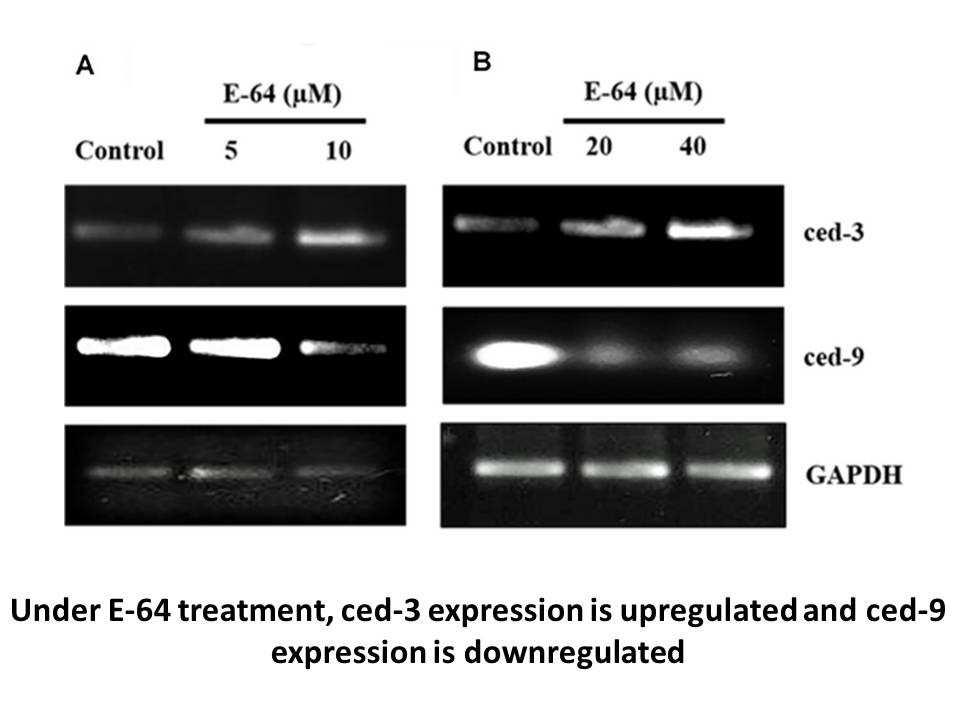
E3 ubiquitin ligases are key players in the ubiquitin-proteasome pathway because they catalyse ubiquitination of substrate proteins.39, 40, 41 As important regulators of cellular ubiquitination, E3 ligases are emerging as attractive drug targets, particularly in cancer.42, 43, 44 However, E3 ligases
-
The fact that the mean tumor size of
2020-01-07
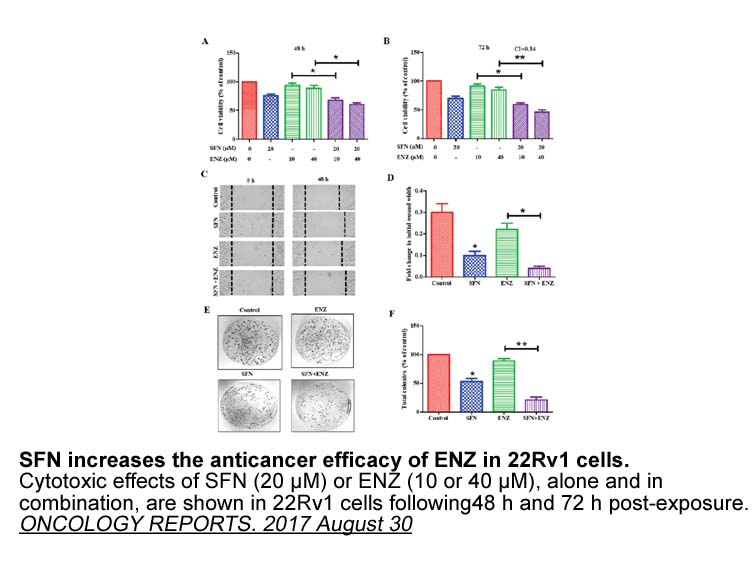
The fact that the mean tumor size of the E1202-654 + α-GalCer group was much smaller than that of the α-GalCer inoculated group in both protocols indicates that immunization with E1202-654 plus α-GalCer, which induces a strong CD8+ T cell E1 antigen-specific immune response, is involved in the elimi
16542 records 963/1103 page Previous Next First page 上5页 961962963964965 下5页 Last page